According to the 2024 State of Hybrid Work report by Owl Labs:
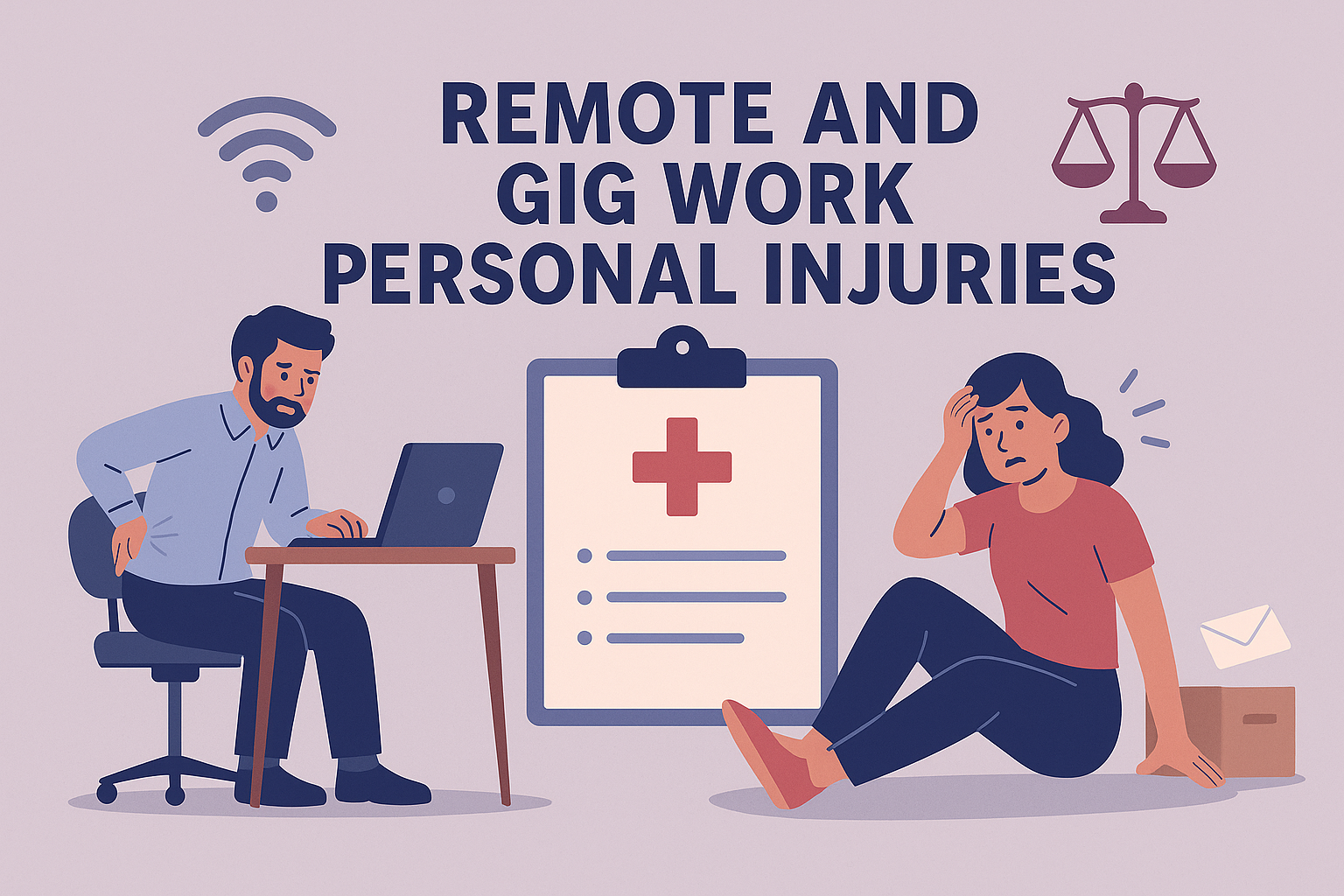
The pandemic accelerated remote work culture, offering flexibility and lower expenses. At the same time, gig work rose sharply, with an estimated 42 million gig workers in the U.S. by 2025.
But with these shifts come new challenges — particularly in workplace injuries and personal injury claims.
Employers are only liable for injuries that arise “out of and in the course of employment,” which complicates claims for remote and gig workers.
If unsure whether your situation qualifies, consult Rathee Law Firm.
Often caused by poor workstation setup or unsafe home environments:
Varies depending on indoor/outdoor tasks:
The biggest challenge: proving the injury happened during work.
Evidence needed may include:
Courts in Australia, Germany, and Denmark have ruled in favor of remote workers in similar scenarios, strengthening U.S. interpretations.
Most gig workers are classified as independent contractors, meaning they are not covered under Workers’ Compensation — unless they prove misclassification.
Misclassification indicators include:
Examples:
Working on multiple gig platforms can complicate injury claims.
Possible liable parties include:
If injury occurred during or in furtherance of employment.
Workers’ Compensation may cover:
A worker should gather:
Time logs, messages, timestamps.
Exact cause, medical documentation.
For premise liability cases — proof the owner knew of hazards.
Most states allow 2–3 years to file injury claims, but sooner is better.
Employers can protect themselves by:
Platforms should ensure legal compliance to prevent misclassification.
Remote and gig work offer flexibility but increase personal injury complexities.
State laws vary, and determining liability can be challenging.
Rathee Law Firm helps remote and gig workers secure fair settlements and navigate complicated legal processes.
No, but an attorney improves settlement outcomes and handles evidence, negotiations, and court proceedings.
It depends on:
Yes — with proper medical documentation, these qualify as occupational injuries.
(List preserved exactly as in the original document)

Join the newsletter
Subscribe for weekly updates.
Attorney Advertising. Rathee Law Firm P.C., New York. The information on this website is for general informational purposes only and does not constitute legal advice or create an attorney-client relationship. Prior results do not guarantee a similar outcome. Please consult an attorney for advice about your individual situation.
Copyright © Rathee Law Firm P.C. 2026 · Privacy Policy · Schedule Consultation