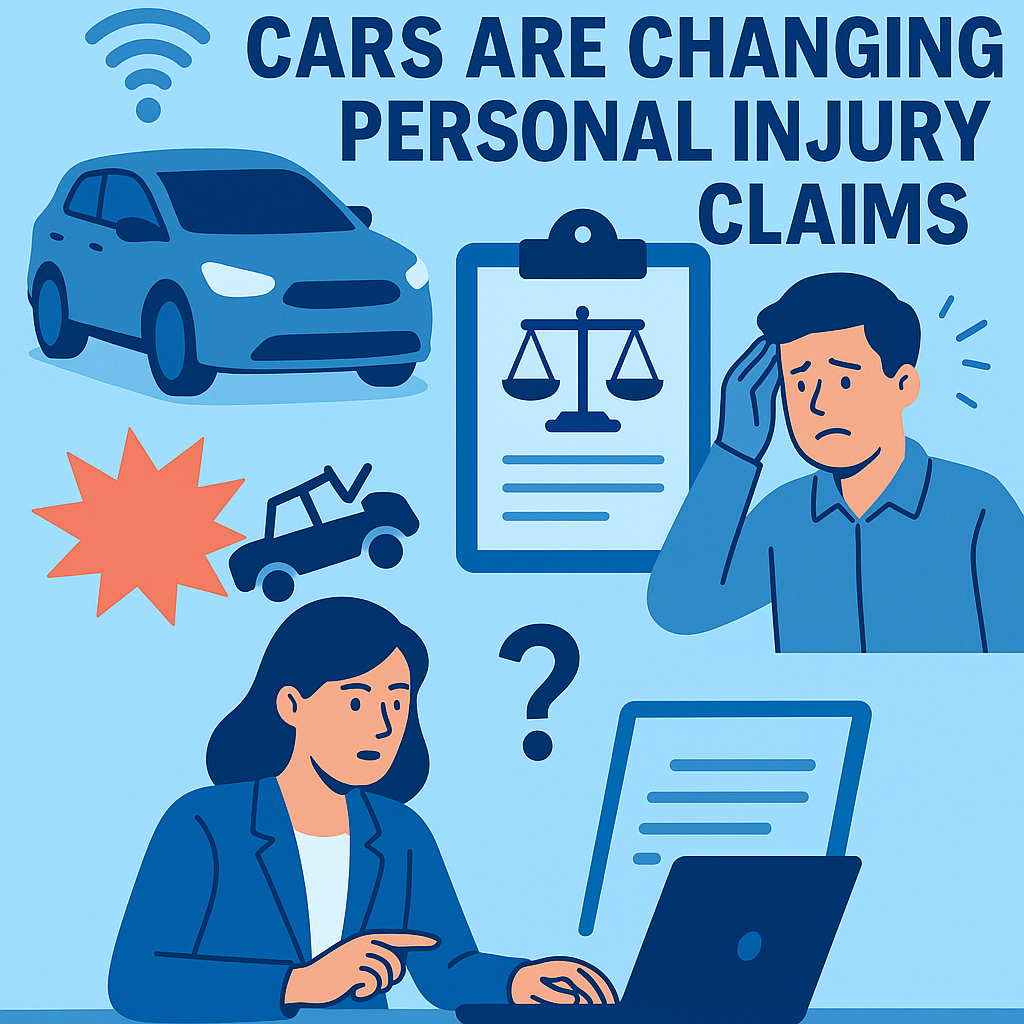
According to the Insurance Institute for Highway Safety, there will be 4.5 million self-driving cars, with partial automation, on US roads by 2030.
Self-driving vehicles, often referred to as Autonomous Vehicles (AVs), which were a rare sight just a decade ago, are increasingly visible on US roads.
Companies like Tesla, Audi, Mercedes-Benz, Volvo, Toyota, Nissan, Ford, and even Alphabet’s Waymo and General Motors’ Cruise are making strides in the field, rolling out advanced versions of vehicles with new automation features, at more competitive rates.
AVs are not limited to personal vehicles and the ride-hailing sector. Recently, in 2025, Aurora Innovation launched commercial driverless trucking operations in Texas on Interstate 45 (I-45).
While Aurora has only commissioned two trucks, they plan to expand the operation to twenty driverless trucks and enter Arizona, Phoenix, and El Paso by the end of 2025.
The emergence and increased adoption of AVs bring with them complex new challenges in personal injury law, including those related to liability, claim filing, compensation, and implications for human drivers.
Even though AVs are expected to significantly reduce motor vehicle accidents, the current level of technology may not be suited to completely rely on automation. If you have been injured by a self-driving vehicle or plan to buy or own one, this blog will comprehensively cover every aspect related to personal injury claims from self-driving cars.
While some vehicle manufacturers already have autonomous driving features, such as Tesla’s Autopilot, they are not entirely autonomous and still require human intervention in case of errors.
The Society of Automotive Engineers (SAE International) defined six levels of driving automation, now adopted in US laws:
These levels impact liability in personal injury cases. For instance, Tesla was ordered to pay $243 million after a fatal crash involving Autopilot (Level 2).
Most traditional vehicle accidents stem from human error, including:
Self-driving vehicles aim to reduce these risks. However, between June 2024 and March 2025, 570 crashes involving automated systems were reported (NHTSA).
AVs still struggle with:
In October 2023, a Cruise Robotaxi hit and dragged a pedestrian due to failure to detect them.
There may be multiple liable parties depending on the circumstances:
Responsible under product liability laws if the accident is due to hardware or software failure.
Out of 159,840 AV disengagements in California, 25.7% were due to software/hardware issues.
Liability may apply if sensors like LiDAR, RADAR, or cameras are faulty.
If autopilot wasn't active or warnings were ignored, the driver may be liable.
Negligence in repairs/maintenance can result in liability.
May be liable if poor road conditions caused the accident.
Companies like Waymo plan to operate in NYC. Passengers injured in AV accidents can file personal injury claims.
In New York, personal injury claims must be filed within three years.
Key legal concepts in AV-related claims:
Insurers now review electronic control modules to determine liability.
Self-driving car owners should:
Tesla drivers often misuse Autopilot (classified as an Advanced Driver Assistance System) as full automation.
While some AV companies currently admit fault and settle, this may not always be the case in the future. Owners might be sued directly.
Yes, but personal auto insurance may not apply in AV-related product liability cases.
Other relevant policies:
In New York, $5 million insurance is required to test fully autonomous vehicles.
Cross-border cases (e.g., Canada, Mexico) and insurer denials may complicate claims.
Step-by-step guide:
As self-driving technology evolves, so does personal injury law. AV accident victims may be entitled to compensatory and punitive damages, but navigating liability can be complex.
Anyone injured in a self-driving accident should:

Join the newsletter
Subscribe for weekly updates.
Attorney Advertising. Rathee Law Firm P.C., New York. The information on this website is for general informational purposes only and does not constitute legal advice or create an attorney-client relationship. Prior results do not guarantee a similar outcome. Please consult an attorney for advice about your individual situation.
Copyright © Rathee Law Firm P.C. 2026 · Privacy Policy · Schedule Consultation